What are Automation Rules and How Do They Help?
Last updated: March 2, 2026
Overview
Automation rules are system-based triggers that automatically apply actions to orders based on specific conditions. Instead of manually reviewing and adjusting orders one by one, automation rules allow your fulfillment workflow to run consistently, accurately, and at scale.
In simple terms:
If an order meets certain criteria → the system automatically performs a predefined action.
These rules reduce manual work, eliminate human error, and create consistency across your fulfillment operations.
Preferred Packaging Automation
At Mountainy, we ship a large volume of orders every day. Over time, we’ve learned that small operational details like packaging, can have a major impact on cost, brand presentation, and damage rates.
One of the simplest but most important automation rules we implement for every client is preferred packaging automation.
Every brand has different packaging requirements. Some want poly mailers to keep shipping costs low. Others prefer bubble mailers for added protection. Some require boxes with void fill for fragile products.
Without automation rules in place, our packers would default to the most cost-efficient packaging option typically poly mailers. While that works for many brands, it may not align with your brand standards or product protection needs.
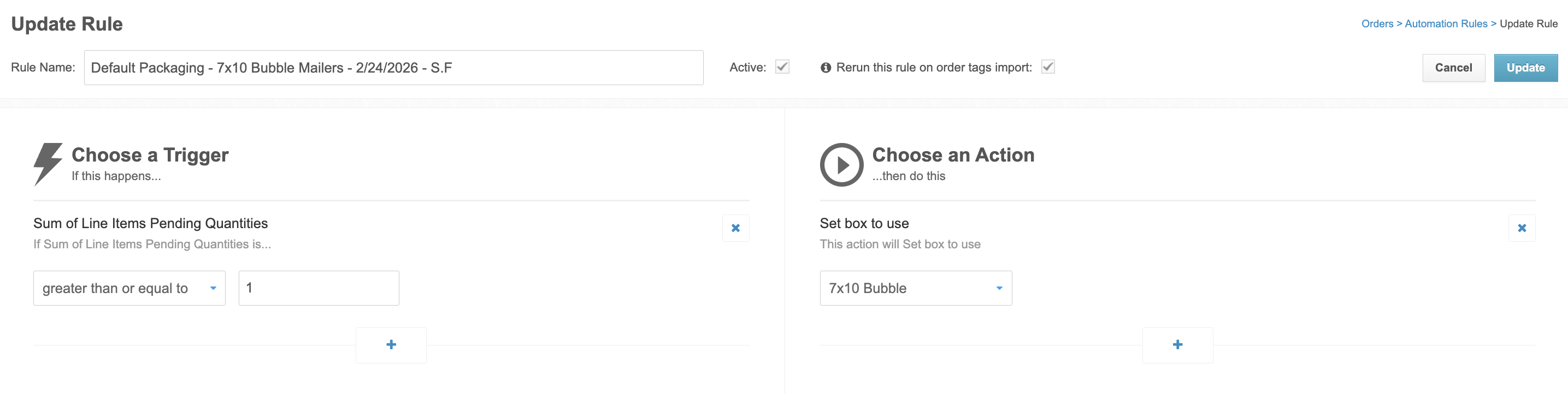
For example, if a client wants all orders shipped in bubble mailers, we create an automation rule that automatically assigns that packaging type to every qualifying order. This removes guesswork on the warehouse floor and ensures consistency across every shipment.
Automation rules allow us to:
Maintain brand standards
Reduce packing errors
Improve product protection
Keep fulfillment efficient
Instead of relying on manual notes or packer memory, the system instructs the warehouse exactly how each order should be packed.
Recommended Automation for Subscription Brands
If you operate a subscription brand, there is one automation rule we strongly recommend:
A 24-hour hold on all recurring subscription orders.
By default, once Shopify generates a subscription renewal order, it is immediately pushed into ShipHero and becomes eligible for fulfillment. If no controls are in place, our team can begin picking and packing that order right away.
The challenge we consistently see with subscription brands is this:
Customers frequently want to cancel, skip, or modify their order shortly after it generates.
Without a hold window in place, we often fulfill the order before the customer reaches out — which creates a difficult situation. Once an order has shipped, it cannot be canceled.
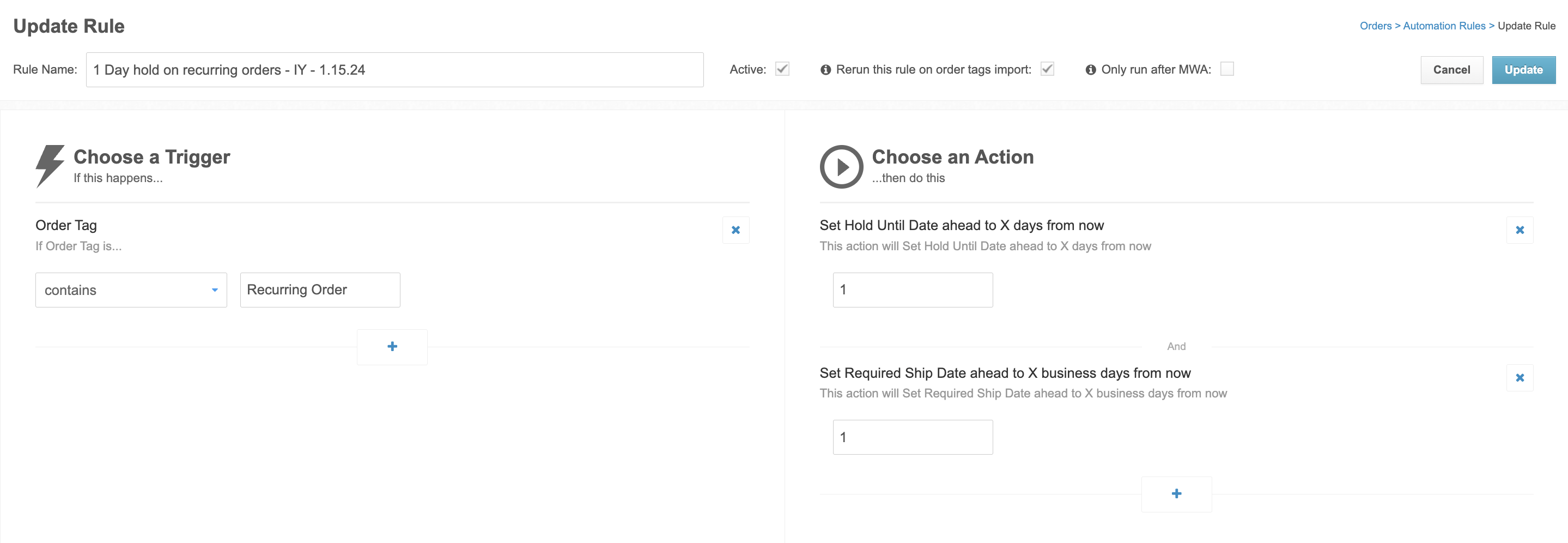
By implementing a 24-hour automated hold, you create a buffer that allows:
Customers time to cancel
Customers to edit their subscription
Address changes to be made
Support tickets to be resolved
After the hold period expires, the order automatically releases into fulfillment.
This simple rule dramatically reduces:
Refund requests
Reshipments
Customer service workload
Operational errors
For subscription brands, this is not just helpful — it is one of the most impactful automation rules we implement.
Carrier Restriction Automation for Problem Addresses
Another powerful automation rule we use is carrier restriction logic.
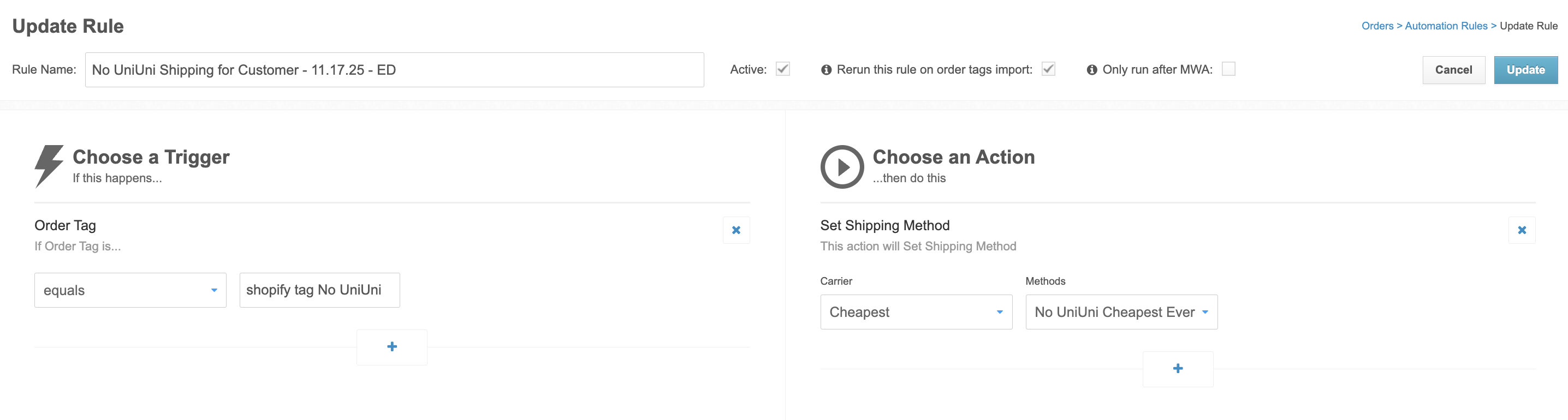
We occasionally see situations where a specific customer repeatedly has delivery issues with one carrier — for example, consistent problems with UniUni, Amazon Shipping, or USPS. However, when the same address is shipped with a different carrier, the delivery goes through without issue. Instead of manually reviewing these every time, we can implement a rule that triggers off an order tag.
For example, if an order is tagged to avoid a specific carrier, the automation will automatically prevent that carrier from being used for that shipment. The system will then rate-shop or default to an alternative carrier instead.
This allows us to:
Reduce repeated delivery failures
Improve customer experience
Prevent ongoing carrier-related issues
Eliminate manual oversight
Once the rule is in place, the system handles it automatically moving forward.
Insert Cards & Free Gift Automation
Many brands want to include insert cards or free gifts — but don’t want to clutter their Shopify store by adding them as products during checkout. Automation rules solve this cleanly.
Instead of adding inserts or gifts to the cart, we create a dedicated SKU inside ShipHero and trigger it using a tag or specific condition. When the trigger is present, the system automatically adds the insert or gift to the order before fulfillment. Using a separate SKU for inserts or free gifts is highly recommended, as it allows us to properly track inventory levels.
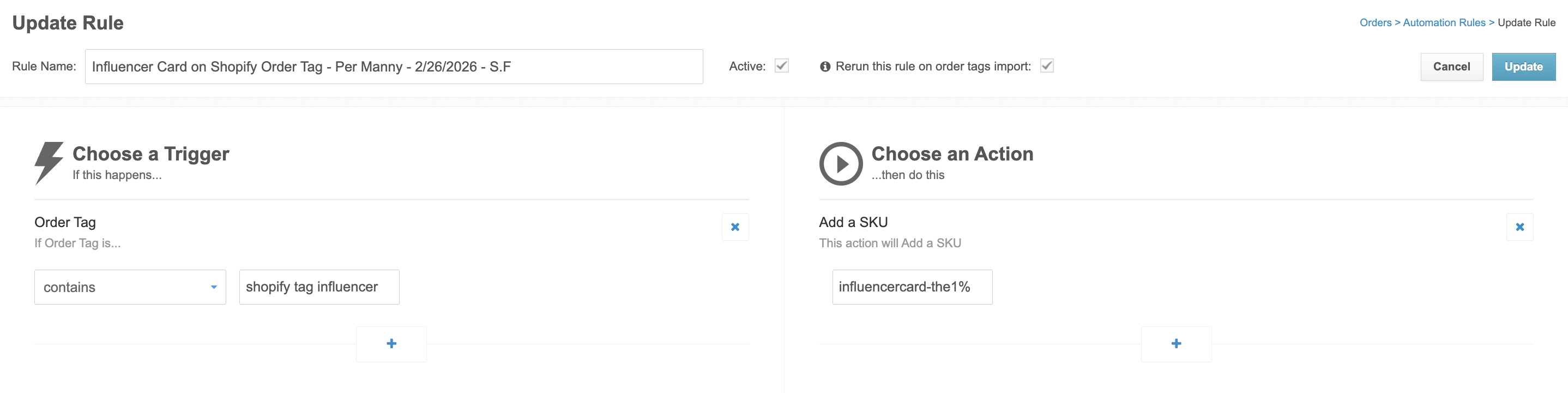
This approach is especially useful when:
Only certain orders receive inserts
First-time customers receive a gift
Influencer or VIP orders include special materials
Promotions require added materials
Rather than manually flagging orders or relying on warehouse notes, automation ensures the correct orders receive the correct materials every time, while keeping your storefront clean.
Priority Fulfillment Automation
Another common automation we implement is priority fulfillment logic.
Some orders need to move faster than others. This is especially common with TikTok Shop orders, influencer shipments, VIP customers, or time-sensitive promotions. In many cases, brands want these orders fulfilled immediately to protect performance metrics or customer experience.
Instead of manually reviewing and adjusting these orders, we can create automation rules that trigger off a specific sales channel or order tag.
For example:
Orders from a specific sales channel (like TikTok Shop)
Orders with a “Priority” or “Expedited” tag
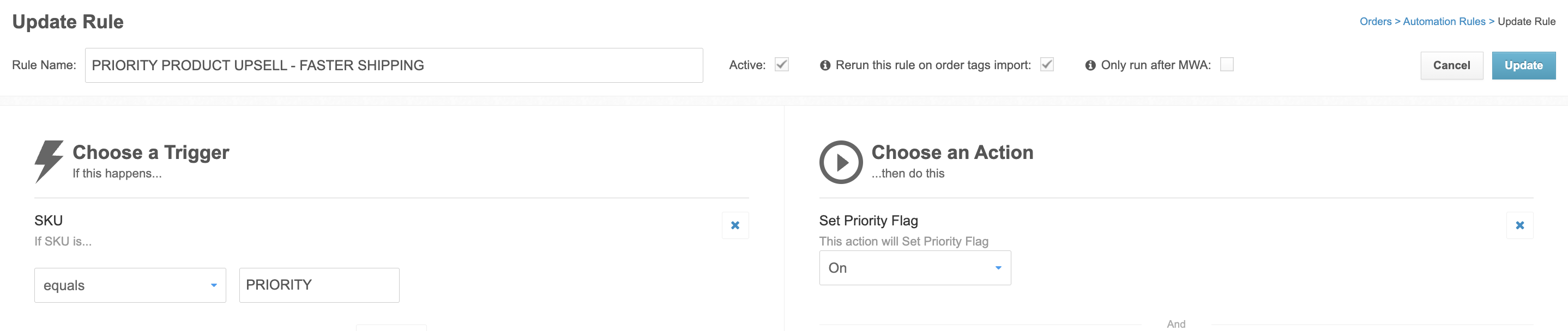
When triggered, the system can automatically:
Set the order to high priority
Increase allocation priority
Move it ahead in the fulfillment queue
This ensures urgent orders are picked and packed first — without requiring manual oversight or special instructions on every order.
Need Help With Automation Rules and Which Ones Fit Your Business?
Automation rules are one of the most powerful tools available inside your fulfillment operation. When configured correctly, they reduce errors, improve customer experience, protect margins, and allow your brand to scale without adding operational complexity.
If you’re unsure which automation rules make sense for your business — or if you’d like to implement any of the examples outlined above — reach out to your Mountainy account manager.